
Mountains
The three great ranges
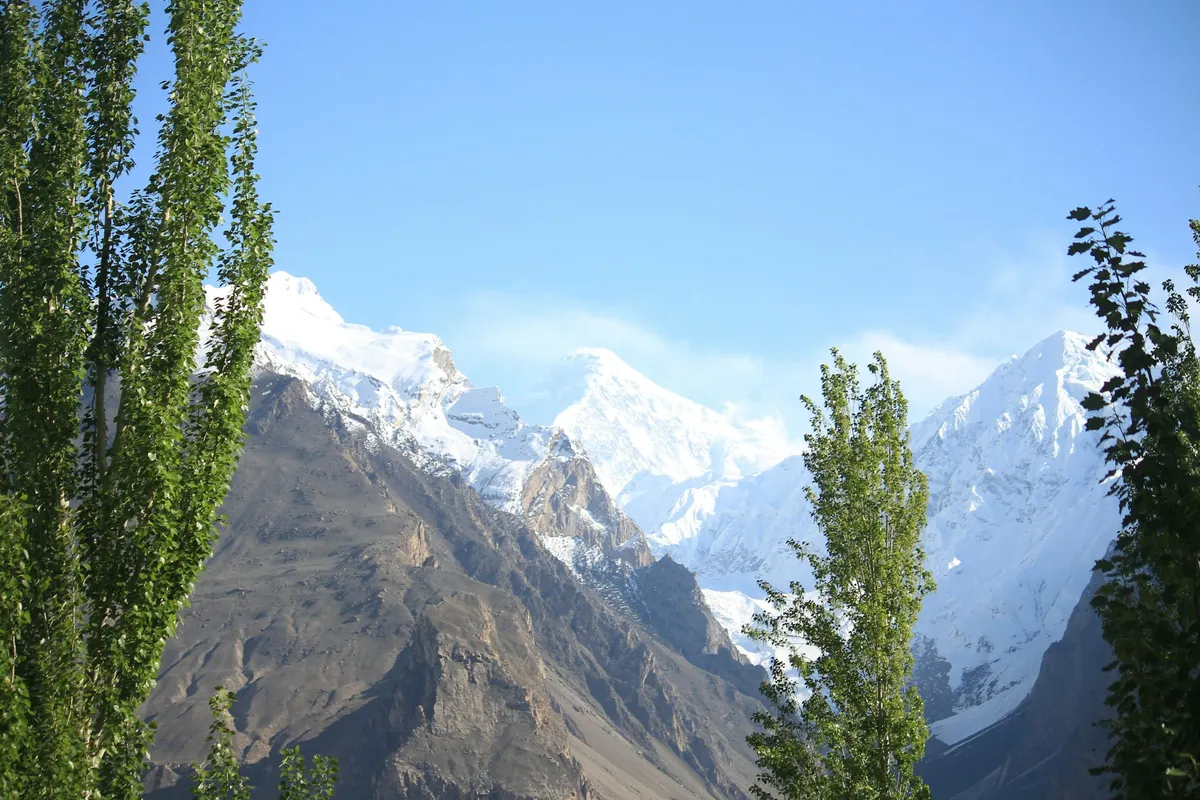
Three of the world's major mountain systems meet in northern Pakistan: the Karakoram, the Himalaya and the Hindu Kush. Their junction lies near Jaglot in Gilgit-Baltistan, where the Gilgit river joins the Indus. Pakistan also holds the Sulaiman range in the west and the Kirthar range along the Sindh-Balochistan border.
Quick facts
- Junction point
- Near Jaglot, Gilgit-Baltistan
- Karakoram high point
- K2, 8,611 m
- Hindu Kush high point
- Tirich Mir, 7,708 m
- Longest glacier
- Siachen, about 76 km
Background
The Karakoram is the most heavily glaciated range outside the poles, holding the Siachen, Biafo, Baltoro and Batura glaciers. The Himalaya enters Pakistan at Nanga Parbat and continues south-east through Azad Kashmir. The Hindu Kush runs north-east from Afghanistan into Chitral, topping out at Tirich Mir, 7,708 metres. The lower Sulaiman and Kirthar ranges shape the country's western dry belt.
Key entries
- Karakoram
The most glaciated range outside the polar regions.
- Himalaya
Enters Pakistan at Nanga Parbat.
- Hindu Kush
Chitral and the passes into Afghanistan.
- Sulaiman range
Takht-e-Sulaiman, about 3,487 m, in the west.
- Kirthar range
The Sindh-Balochistan boundary hills.
Frequently asked questions
- Where do three ranges meet in Pakistan?
- Near Jaglot in Gilgit-Baltistan, where the Karakoram, Himalaya and Hindu Kush converge.
- Which is the longest glacier in Pakistan?
- The Siachen glacier, at roughly 76 kilometres.