
History of Pakistan
The history of Pakistan spans roughly 9,000 years, from the Neolithic settlement at Mehrgarh in Balochistan through the Indus Valley Civilisation, Gandhara, the Delhi Sultanate, the Mughal Empire, Sikh and British rule, to independence on 14 August 1947. This cluster organises that span into nine eras, each with its dates, its rulers and the places it left behind.
Pakistan's history is best read through the land it happened on. The Indus corridor carried traders, armies and pilgrims for millennia, and almost every era left standing evidence, from the brick streets of Mohenjo-daro to the Mughal gardens of Lahore. Each era page links to the sites, cities and figures that belong to that period.
Quick facts
- Oldest known settlement
- Mehrgarh, c. 7000 BCE
- UNESCO World Heritage sites
- 6 in Pakistan
- Independence
- 14 August 1947
What this section covers
- Prehistory and the Indus Valley
Mehrgarh, Harappa, Mohenjo-daro, c. 7000-1300 BCE
- Vedic and Achaemenid period
Gandhara satrapy, Taxila, c. 1500-326 BCE
- Greco-Buddhist Gandhara
Alexander, the Mauryas, Kushans and Gandhara art
- Hindu Shahi
Kabul and Salt Range dynasties, 9th-11th centuries
- Ghaznavid, Ghurid and Sultanate
Mahmud of Ghazni onward, 11th-16th centuries
- The Mughal Empire
Lahore, Thatta and the Punjab heartland, 1526-1857
- Durrani and Sikh rule
Afghan and Sikh control of Punjab and the frontier
- British colonial period
Railways, canal colonies and the road to 1947
- Pakistan since 1947
Independence, constitutions and the modern state
In this section
 The Indus Valley CivilisationThe Indus Valley Civilisation was a Bronze Age urban culture that flourished across present-day Pakistan and north-west India from about 2600 to 1900 BCE, with its two largest known cities, Mohenjo-daro in Sindh and Harappa in Punjab, both in Pakistan. Its script, found on thousands of seals, remains undeciphered.
 Gandhara and the KushansGandhara was a region centred on the Peshawar valley and Taxila in present-day Pakistan that became a major Buddhist centre between roughly the 1st and 5th centuries CE. Under Kushan rulers such as Kanishka, it produced the Greco-Buddhist sculptural style, the first widespread images of the Buddha in human form.
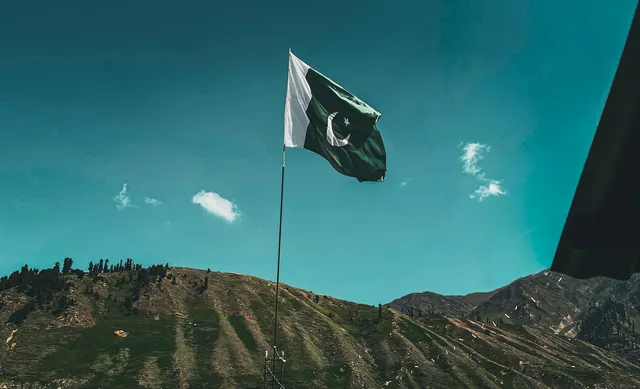 Partition and the making of PakistanPakistan became independent on 14 August 1947, when British India was partitioned into two states. The new country consisted of two wings separated by about 1,600 kilometres of Indian territory, and the division triggered one of the largest mass migrations in recorded history, involving an estimated 14 to 18 million people.
Pages in history
- Prehistory and the Indus Valley
The first era covers farming at Mehrgarh from about 7000 BCE through the rise and decline of the Indus Valley cities. Mohenjo-daro and Harappa, both in modern Pakistan, were planned brick settlements with drainage, granaries and a script that remains undeciphered. The period closes as the cities are abandoned between 1900 and 1300 BCE.
- Vedic and Achaemenid period
Between the Indus cities and Alexander, the north-west shifts to pastoral and early Vedic society, then to imperial administration. Taxila and the Gandhara plain become the eastern edge of the Achaemenid Persian empire, paying tribute and adopting Aramaic script, which later shaped Kharosthi writing across the region.
- Greco-Buddhist Gandhara
Alexander crossed the Indus in 326 BCE, and the centuries that followed produced Gandhara: a Greco-Buddhist culture centred on Taxila, Takht-i-Bahi and the Peshawar valley. Mauryan, Indo-Greek, Kushan and Sasanian rule overlapped here, leaving stupas, monasteries and the sculpture style that first gave the Buddha a human face.
- Hindu Shahi period
After Gandhara's monasteries decline, the Turk Shahi and then Hindu Shahi rulers hold the corridor between Kabul and the Punjab. Their temple complexes survive in the Salt Range at Katas Raj and along the Indus, and their defeat by Ghaznavid armies at the end of the tenth century opens the plains to rule from the west.
- Ghaznavid, Ghurid and Sultanate period
Ghaznavid and Ghurid campaigns from Afghanistan make Lahore and Multan major cities, and Sufi shrines at Multan and Uch become centres of learning and pilgrimage. The Delhi sultanates that follow govern the Indus plains for three centuries, building fortresses, tombs and the brick-and-tile tradition still visible in southern Punjab and Sindh.
- The Mughal period
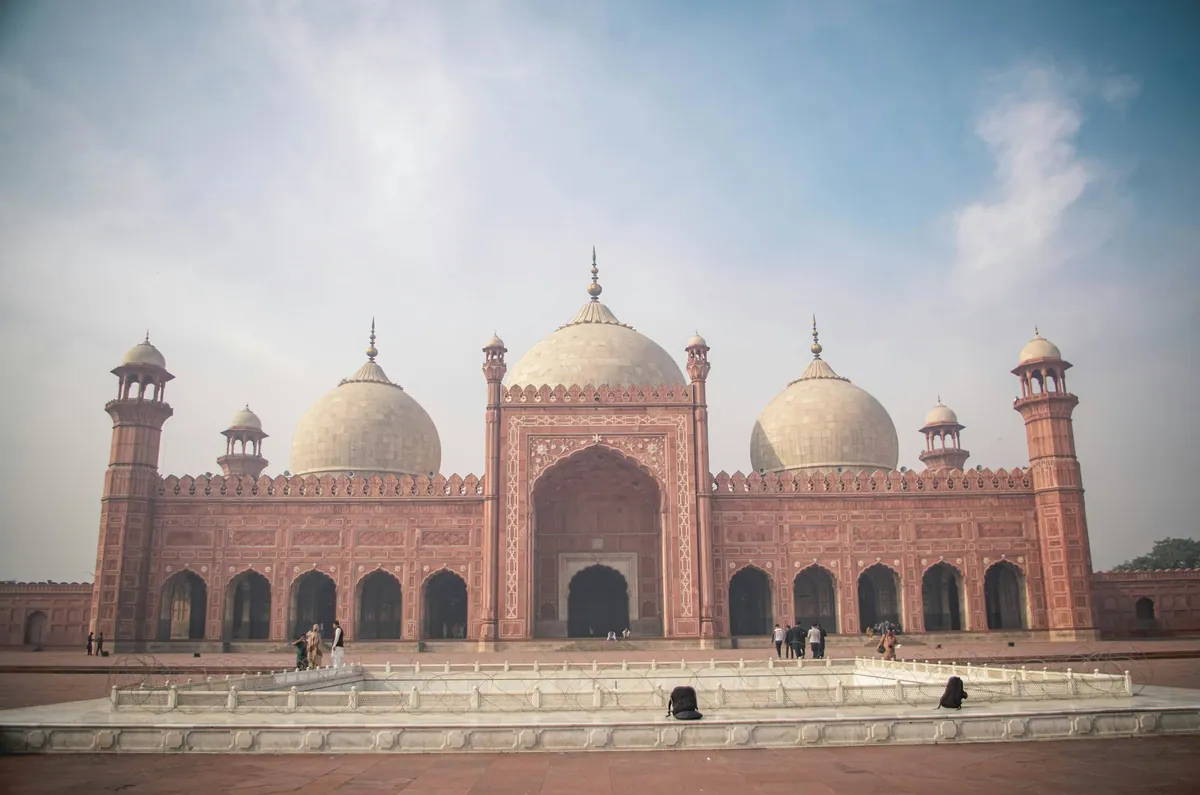
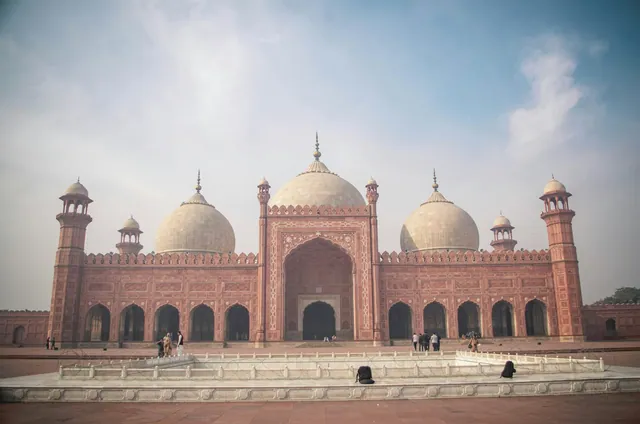
Mughal rule reshaped the cities of the Indus basin. Lahore gained its fort, Shalimar Gardens and Badshahi Mosque; Thatta and Sindh developed tiled tomb architecture; and the Grand Trunk Road carried trade from Bengal to Kabul. Later Mughal weakness after 1707 left the provinces to regional powers.
- Durrani and Sikh rule
Ahmad Shah Durrani's Afghan state claimed Peshawar, Kashmir and much of the Punjab from 1747. Sikh misls consolidated under Ranjit Singh, who took Lahore in 1799 and ruled the Punjab until his death in 1839. British annexation after the Anglo-Sikh wars ended independent rule in 1849.
- British colonial period
Colonial administration rebuilt the economy of the Indus basin around canal irrigation, railways and cantonment cities. Karachi grew as a port, Lahore as an administrative and educational centre, and the canal colonies changed settlement across the Punjab. The period ends with the partition of British India in August 1947.
- Pakistan since 1947
Pakistan has existed as an independent state since 14 August 1947. This period covers constitution-making, the separation of East Pakistan in 1971, successive civilian and military governments, large infrastructure programmes such as Tarbela and Mangla, and the growth of Karachi and Lahore into cities of many millions. Pages in this era carry dated, sourced facts only.
Key dates and milestones
| When | What happened |
|---|---|
| c. 7000 BCE | Farming settlement at Mehrgarh, Balochistan |
| c. 2600-1900 BCE | Mature Indus Valley Civilisation at Harappa and Mohenjo-daro |
| 326 BCE | Alexander crosses the Indus and Jhelum |
| 1526-1857 | Mughal rule, with Lahore as an imperial capital |
| 1849 | British annexation of Punjab after the Sikh wars |
| 14 August 1947 | Independence of Pakistan |
Practical notes
- Every era page lists its dates, its rulers and the surviving sites you can still visit.
- The master chronology at /pakistan/history/timeline merges all nine eras into one dated list.
- Dates before 1500 BCE are archaeological estimates and are given as ranges, not fixed years.
Where in Pakistan
Sindh · Punjab · Khyber Pakhtunkhwa · Balochistan · Gilgit-Baltistan
Frequently asked questions
- How old is the history of Pakistan?
- Human settlement in the region is about 9,000 years old. The earliest excavated farming village, Mehrgarh in Balochistan, dates to roughly 7000 BCE, and continuous urban life begins with the Indus Valley Civilisation around 2600 BCE.
- What was the Indus Valley Civilisation?
- A Bronze Age urban civilisation that flourished c. 2600-1900 BCE across the Indus basin. Its largest excavated cities in Pakistan are Mohenjo-daro in Sindh and Harappa in Punjab, both planned on a grid with fired-brick drainage.
- When did Pakistan become independent?
- Pakistan became independent on 14 August 1947 at the partition of British India. It adopted its first constitution and became a republic on 23 March 1956, now marked as Pakistan Day.