
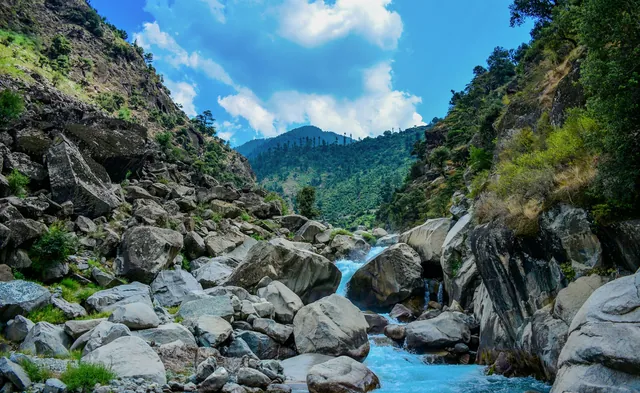
Neelum valley
240 km of pine forest and terraced villages along the river.
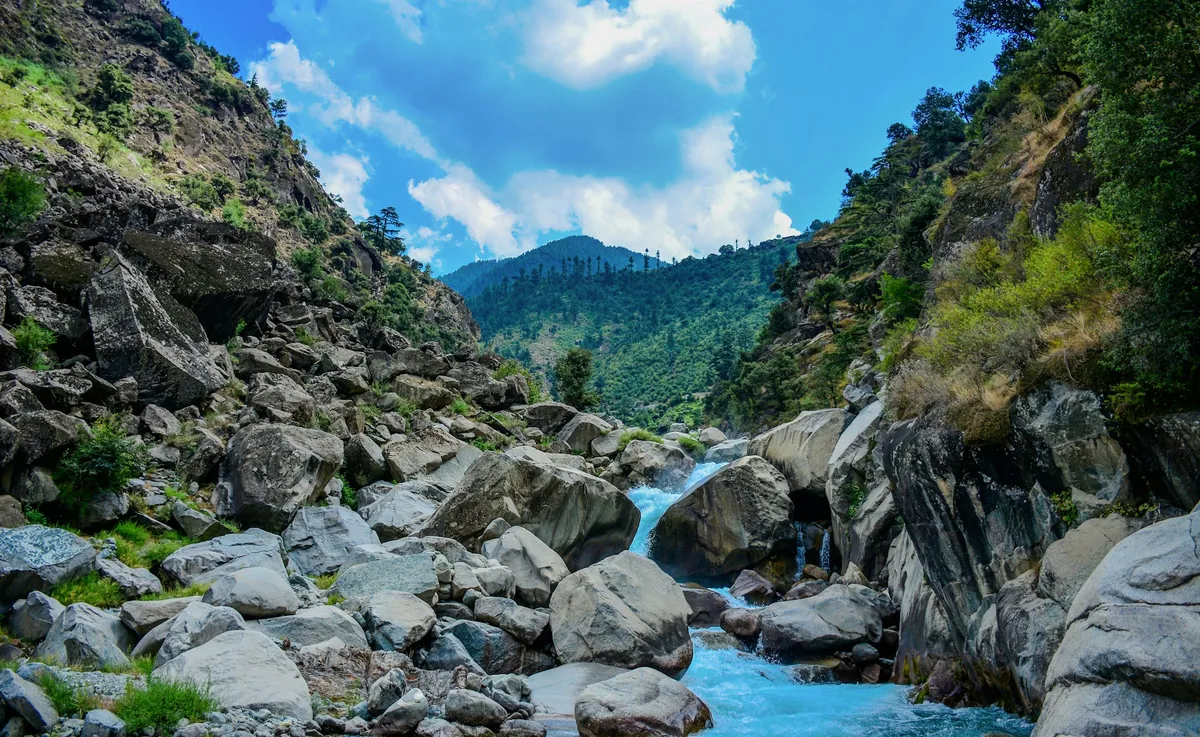
Region of Pakistan
Azad Kashmir — pine valleys, glacial rivers, and Neelum's alpine villages.
Azad Jammu and Kashmir covers 13,297 km² of the western Himalaya, all of it forest, terrace and river. The Neelum valley runs about 240 km northeast from Muzaffarabad along the Line of Control.
Its villages sit on steep pine slopes: Kel, Arang Kel reached by chairlift and a climb, and Sharda with the ruins of a Sharada Peeth learning centre dated to the sixth century.
The 2005 earthquake, magnitude 7.6, was centred near Muzaffarabad; much of what visitors see today was rebuilt after it.
240 km of pine forest and terraced villages along the river.
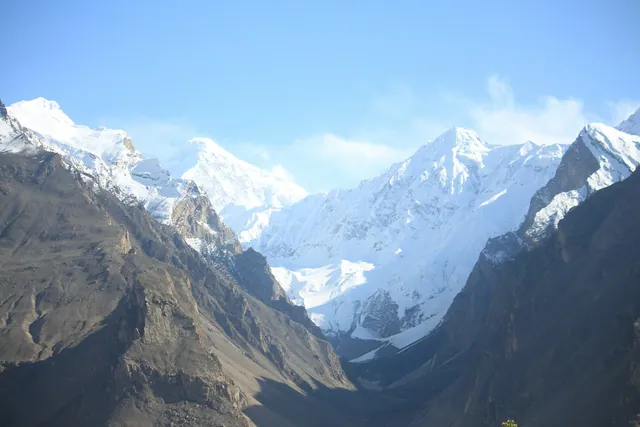
Wooden Kashmiri houses and rice terraces, open May to October.
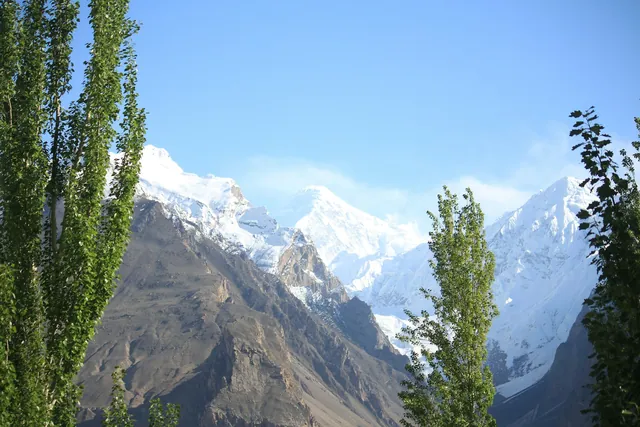
The range along AJK's southern edge, rising over 4,000 m.
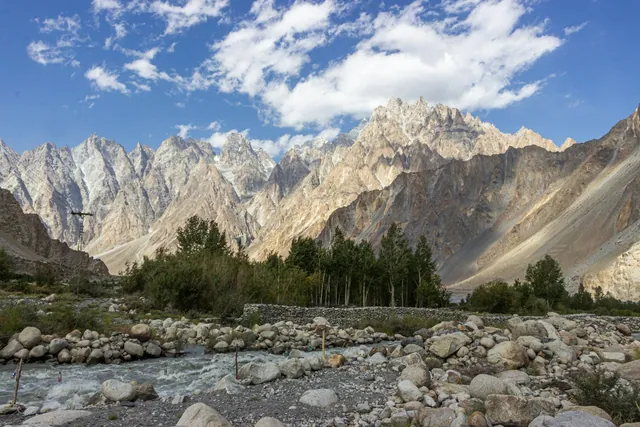
Fed by snowmelt, joining the Jhelum at Muzaffarabad.
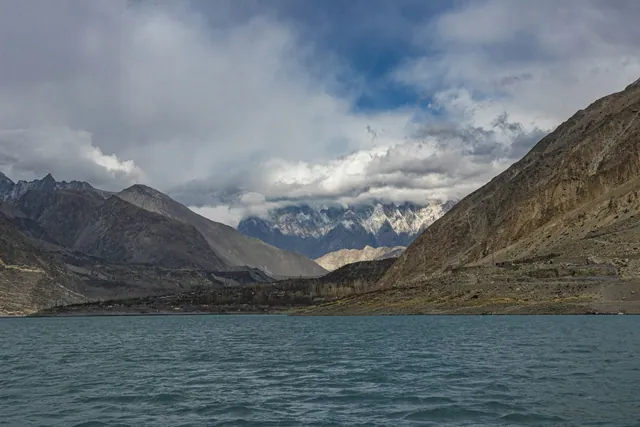
Alpine lake at 3,700 m, a six-hour trek from Dowarian.
Man-made lake near Rawalakot, reachable all year.
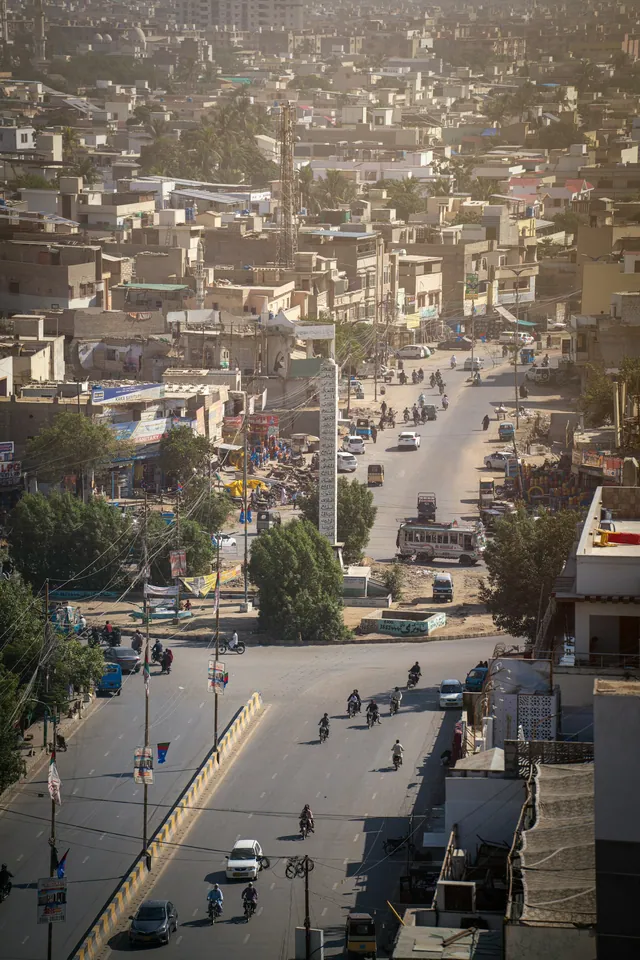
Pink salt tea churned with milk and topped with nuts.

Farmed and grilled at roadside stops through Neelum.
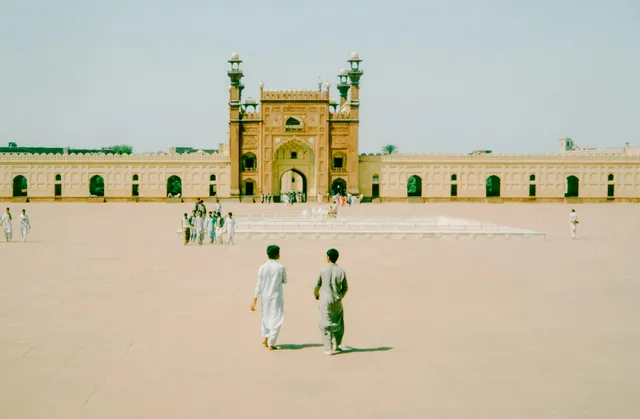
Makai roti with local butter, the winter staple.
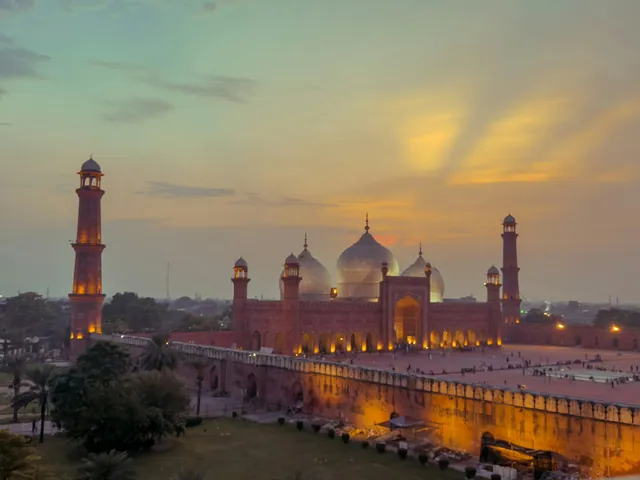
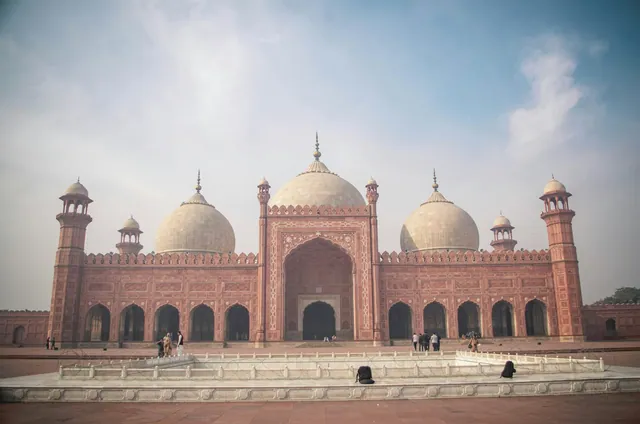
Badshahi Mosque, Lahore Fort and Shalimar Gardens, built 1556–1707.
Blue Multani tiles and carved domes across Punjab and Sindh.
Rohtas, Derawar, Baltit and Ranikot, the largest fort wall in the world.
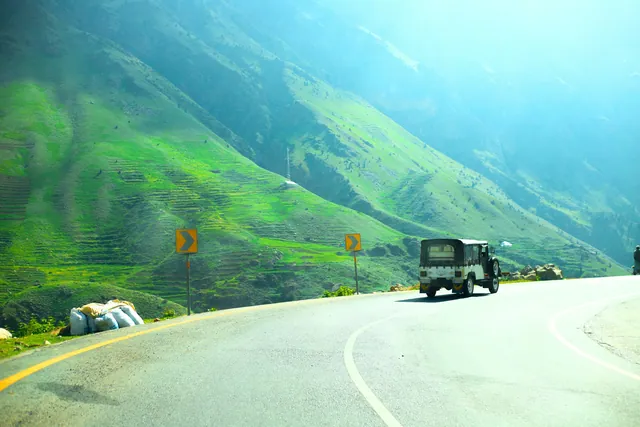
Walnut carving and deodar house frames.
Hand-loomed wool from the upper valleys.
A sixth-century centre of learning above the Neelum.
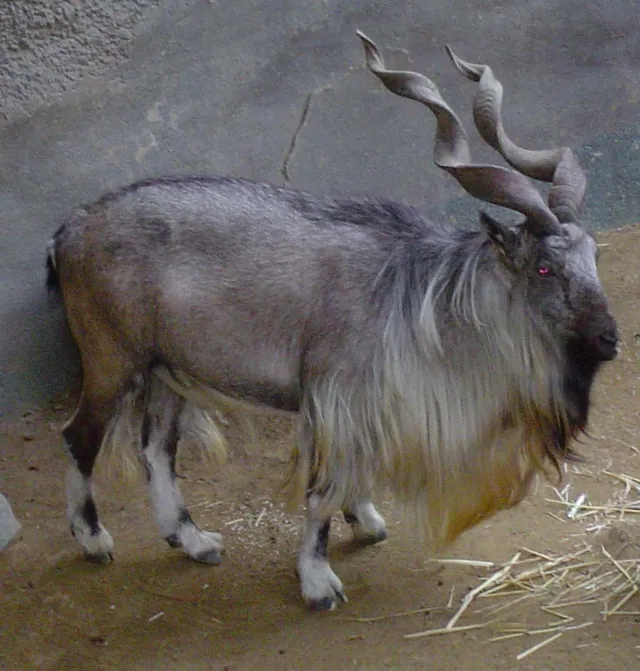
The national animal, a wild goat of the northern ranges.
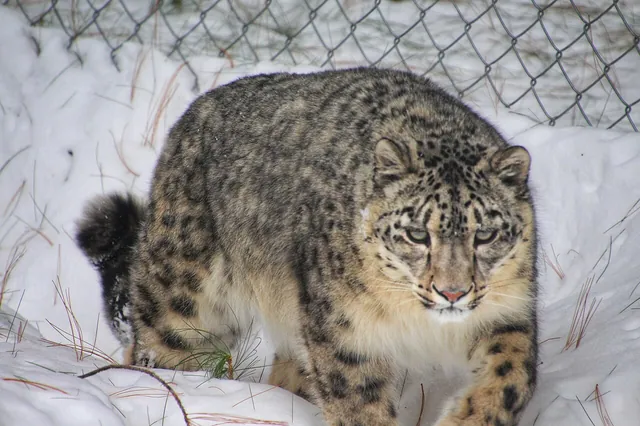
Roughly 200–420 remain in the Karakoram, Himalaya and Hindu Kush.
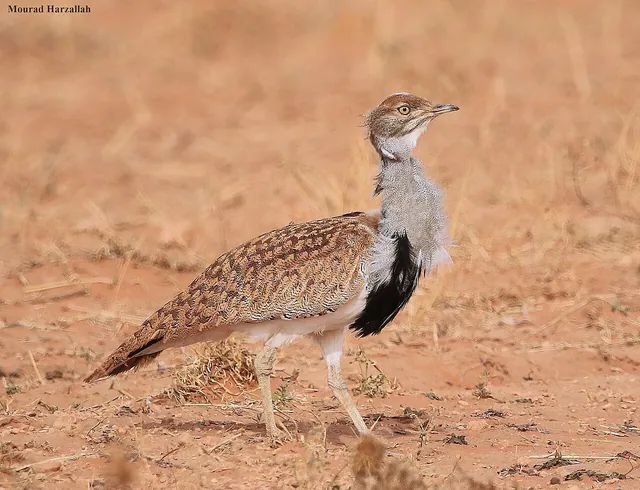
A winter migrant to the deserts of Balochistan and Cholistan.
Each one opens its own page: its story, rivers and lakes, food, heritage, culture, wildlife and what to see.
Ranjit Singh unified the Sikh misls and built an empire stretching from the Khyber Pass to Kashmir. He ruled from Lahore Fort until his death in 1839; the empire fell to the British in the Second Anglo-Sikh War (1849).
No photographs published from AJK yet.
May to October. Neelum and Leepa close in winter due to snow.
Drive Islamabad → Muzaffarabad (3 hours). No commercial airport inside AJK.
Foreigners need an NOC from the AJK Tourism Department for areas within 10 km of the Line of Control.
Azad Kashmir — pine valleys, glacial rivers, and Neelum's alpine villages.
Every AJK photograph on Pixistan is shot on location by a Pakistani photographer. Pixistan does not accept AI-generated or agency stock imagery.
Full-resolution files in PKR.
Browse galleryPhotos, films, guides and stories.
Open category