
Deserts
The Thar desert in Pakistan
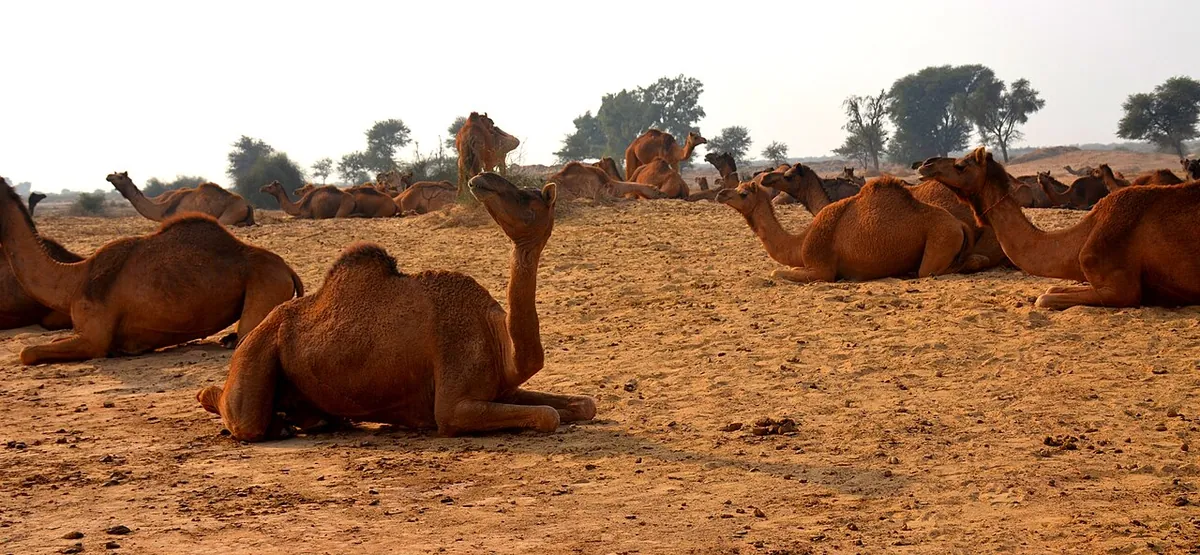
The Thar desert covers roughly 20,000 square kilometres of south-eastern Sindh, continuing east into India. Its main Pakistani district is Tharparkar, which unusually for a desert supports dense rural settlement, with a population of over 1.6 million dependent on monsoon rain, wells and livestock.
Quick facts
- Area in Pakistan
- About 20,000 sq km
- Main district
- Tharparkar
- Rain season
- July to September
- Karoonjhar hills
- About 305 m
Background
Thar receives most of its rain between July and September, and the landscape turns green for a few weeks afterwards. The Karoonjhar hills near Nagarparkar, rising to about 305 metres, are granite outcrops with old Jain temples at their base. Coal reserves at Thar Block II have been developed for power generation since 2019.
Key entries
- Mithi
District headquarters of Tharparkar.
- Nagarparkar
Karoonjhar hills and historic temples.
- Thar coalfield
Lignite reserves developed since 2019.
- Monsoon greening
Short grazing season after the July rains.
Frequently asked questions
- Where is the Thar desert in Pakistan?
- In south-eastern Sindh, mainly Tharparkar district, continuing across the border into India.
- Does it rain in Thar?
- Yes, mostly between July and September, and the desert turns briefly green afterwards.