
Heritage
Mughal architecture in Pakistan
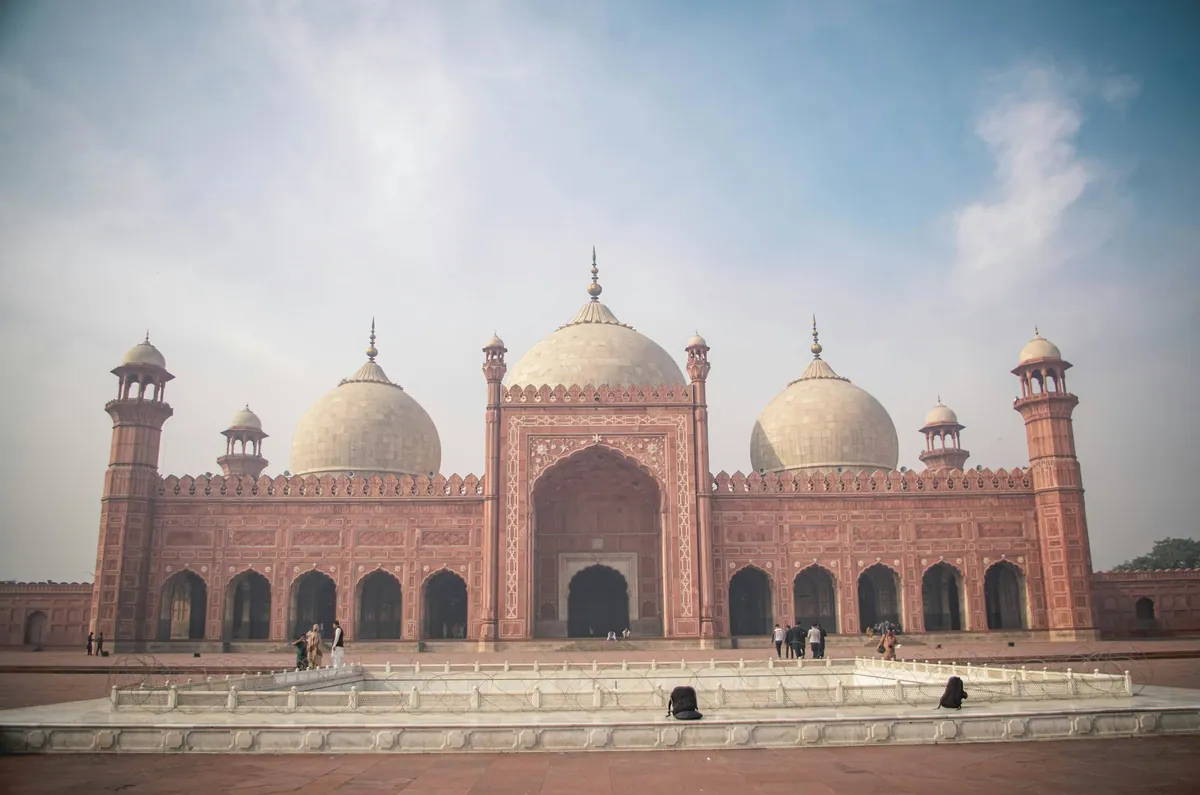
Mughal architecture in Pakistan spans roughly 1526 to 1857 and is concentrated in Lahore, Thatta and the Punjab plain. Its landmarks include the Lahore Fort, the Shalimar Gardens of 1641, the Wazir Khan Mosque of 1634, the Badshahi Mosque of 1673 and the Shah Jahan Mosque at Thatta, completed in 1647.
Quick facts
- Period
- 1526 to 1857
- Shalimar Gardens
- Completed 1641
- Badshahi Mosque
- Completed 1673
- Shah Jahan Mosque domes
- 93
Background
The style combines red sandstone and brick with marble inlay, glazed kashi tilework and formal charbagh gardens divided into four quarters by water channels. Lahore holds the densest concentration, including the tombs of Jahangir, Asif Khan and Nur Jahan at Shahdara. In Sindh, the Shah Jahan Mosque is notable for its Persian-influenced blue tile and its 93 domes.
Key entries
- Lahore Fort
Sheesh Mahal, Naulakha Pavilion and the Picture Wall.
- Wazir Khan Mosque
1634, celebrated for its kashi-kari tile panels.
- Shalimar Gardens
Three terraces and over 400 fountains as built.
- Shah Jahan Mosque, Thatta
1647, Persian-influenced blue tilework.
- Shahdara tombs
Jahangir, Asif Khan and Nur Jahan across the Ravi.
Frequently asked questions
- Where is the best Mughal architecture in Pakistan?
- Lahore holds the densest concentration, with Thatta in Sindh the most important site outside Punjab.
- When were the Shalimar Gardens built?
- They were completed in 1641 under Shah Jahan.