
Rivers and lakes
Alpine and glacial lakes
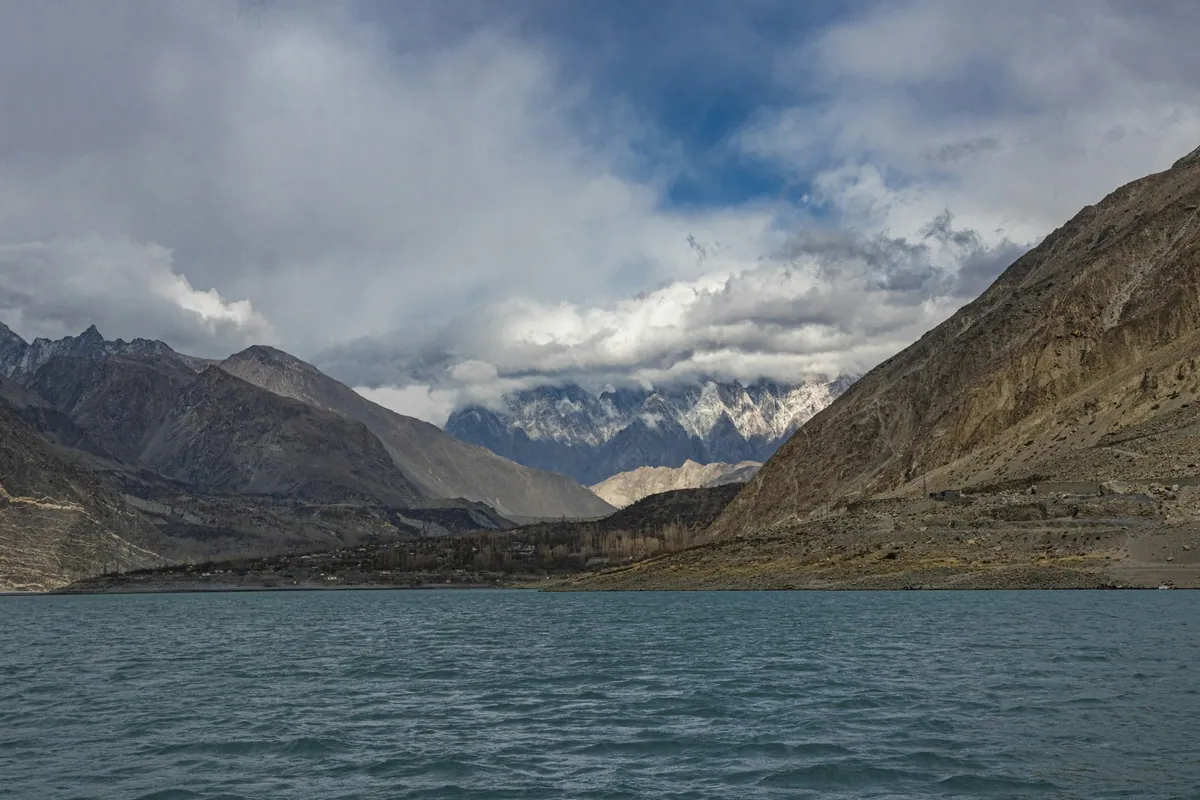
Pakistan's high lakes sit mostly between 2,500 and 4,500 metres in Gilgit-Baltistan, Khyber Pakhtunkhwa and Azad Kashmir. They include Saif-ul-Malook at 3,224 metres, Sheosar on the Deosai plains at about 4,142 metres, Rush Lake at about 4,694 metres, and Attabad, formed by a landslide in January 2010.
Quick facts
- Saif-ul-Malook
- 3,224 m
- Sheosar Lake
- About 4,142 m
- Rush Lake
- About 4,694 m
- Attabad formed
- 4 January 2010
Background
Most are glacier-fed and frozen for several months a year. Attabad is different: a landslide at Attabad village dammed the Hunza river on 4 January 2010, flooding villages and a section of the Karakoram Highway, which was later rerouted through tunnels. Glacial lake outburst floods are a recognised hazard across the northern valleys.
Key entries
- Saif-ul-Malook
Kaghan valley, below Malika Parbat.
- Sheosar
On the Deosai plateau, open in summer only.
- Attabad
Landslide lake on the Hunza river.
- Ratti Gali
Neelum valley, about 3,700 m.
- Ansoo Lake
Kaghan valley, shaped like a teardrop.
Frequently asked questions
- How was Attabad Lake formed?
- A landslide on 4 January 2010 blocked the Hunza river, flooding the valley upstream and submerging part of the Karakoram Highway.
- Which is the highest well-known lake in Pakistan?
- Rush Lake in Nagar, at roughly 4,694 metres, is among the highest.